Methoni
Cartes Postales from GreeceMethoni is the village where the traveling writer retreats after a planned meeting at Kalamata Airport fails to take place. During a stay of almost two weeks, the kindness of the couple running his pension offers practical care without immediately lifting his despondency. The village becomes a turning point: rather than return to London, he decides to remain in Greece and travel alone, beginning a new exchange through postcards.
Arrival and setting
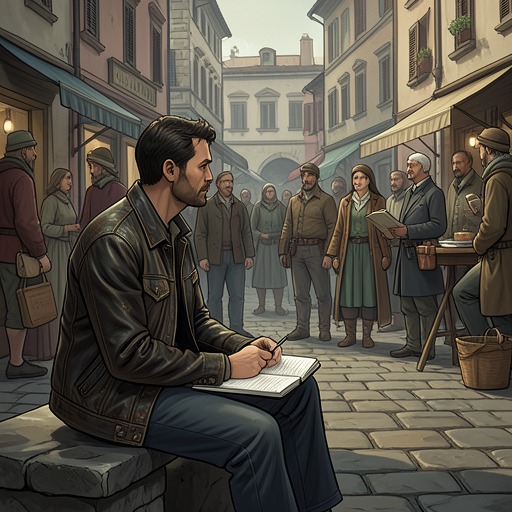
After receiving the message that his companion could not come, the writer leaves the airport and drives without a settled destination. He stops at the sea, where a roadside sign for rooms leads him to accommodation in Methoni. He spends the first days sitting apart from ordinary activity, while the Ionian Sea provides the setting for his withdrawal.
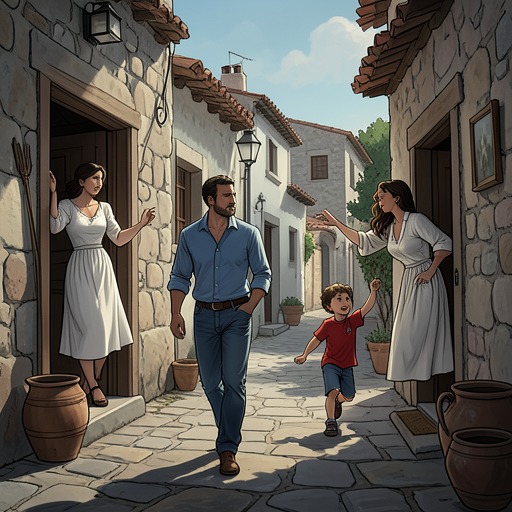
The couple who run the pension leave food for him each evening and take it away in the morning. The wife puts fresh flowers in his room and replaces them when they wilt. He is scarcely able to register hunger, thirst, or temperature, but he does register their kindness. The care is unobtrusive: the couple look after him while he remains largely unable to respond.
The long stay
The writer loses track of time in Methoni. One day, as he is heading towards the beach, the pension owner greets him with the new month; only then does he realize that he has been there almost a fortnight. His earlier plan for a shared tour of the Peloponnese, followed by ferry journeys to Kithera and Crete, now seems unreal. In Methoni, the carefully arranged holiday has given way to an unplanned pause.
He also spends time under a shower until the water turns cold, only to find that he cannot feel it on his skin; his watch shows that an hour has passed. This episode conveys how deeply his despair has disrupted his awareness of time and sensation. The pension and its owners provide a stable setting through those days, even as he remains emotionally withdrawn.
A decision to continue
At last, the writer considers whether to return to London or stay in Greece. His research in Athens has gone well, and material from the Museum of Cycladic Art gives him a basis for beginning his book. He can write from a hotel room, while the prospect of returning to London is linked to the likelihood of looking for his absent companion in every crowd. He decides to remain in Greece, also hoping to avoid the melancholy of a British autumn.
Before leaving, he calls his brother from a village phone box to arrange for his post and bills to be handled. He does not know how long he will be away, though he expects the advance on his book contract to last a year if he is careful. The decision to leave Methoni is thus not a return to the original itinerary but a move into open-ended travel.
The postcard and its significance
Before setting out, the writer pauses at a rusty carousel displaying a few postcards. He chooses one showing the Venetian Castle, which he has not visited during his stay in Methoni, and sends it despite having no expectation of a reply. The card gives him a way to address the silence between himself and the person who did not arrive: communication becomes a one-way act rather than an attempt to restore the failed meeting.
Methoni therefore marks both a period of isolation and the beginning of a different kind of movement. The place is not presented only as a picturesque destination: its pension, its owners’ daily gestures, and the writer’s decision to depart shape a lived interval between abandonment and renewed travel. The postcard he sends from there also connects his journey to the recurring exchange of Greek postcards, turning the form into a modest means of connection without requiring an answer.